You can also see what information is available elsewhere on the internet to help you get started, including the ANA and PNNA websites.
Your webmaster, who now lives in Oregon, has added an “Introduction to Numismatics” talk given at a local library. (See the PDF viewer window on the Resources page.) This talk covers many important topics and also makes reference to a free guide available from the ANA.
Two of the most important things to consider when starting your numismatic journey are whether you’re primarily a collector or an investor (or maybe both), and what types of numismatic items you are interested in collecting, as there are many possibilities besides just U.S. coins and paper money.
If you’re a collector and don’t plan to spend a lot of money, there are many options – even modern coins found in circulation. For any U.S. coin collection, the essential place to start is the Red Book, officially known as A Guide Book of United States Coins, and now in its 80th edition, as of 2027, published by Whitman but also available from other sources – likely including your local coin shop. It still bears the name of R.S. Yeoman – the original editor back in 1947 – but the current senior editor is U.S. coin expert and dealer Jeff Garrett. In the Red Book, you’ll find a wealth of information, for example, which design types and denominations were minted, in which years, at what mints, the mintage figures, and approximate retail values in various grades (conditions).
Other Whitman books you may find useful are the Blue Book (Handbook of United States Coins) with wholesale prices, A Guide Book of United States Paper Money, and the Whitman Guide to Coin Collecting. But Whitman doesn’t have a monopoly on coin books – there are many others you may wish to consider, while following the adage of “Buy the book before the coin.” Ask your fellow collectors for advice.
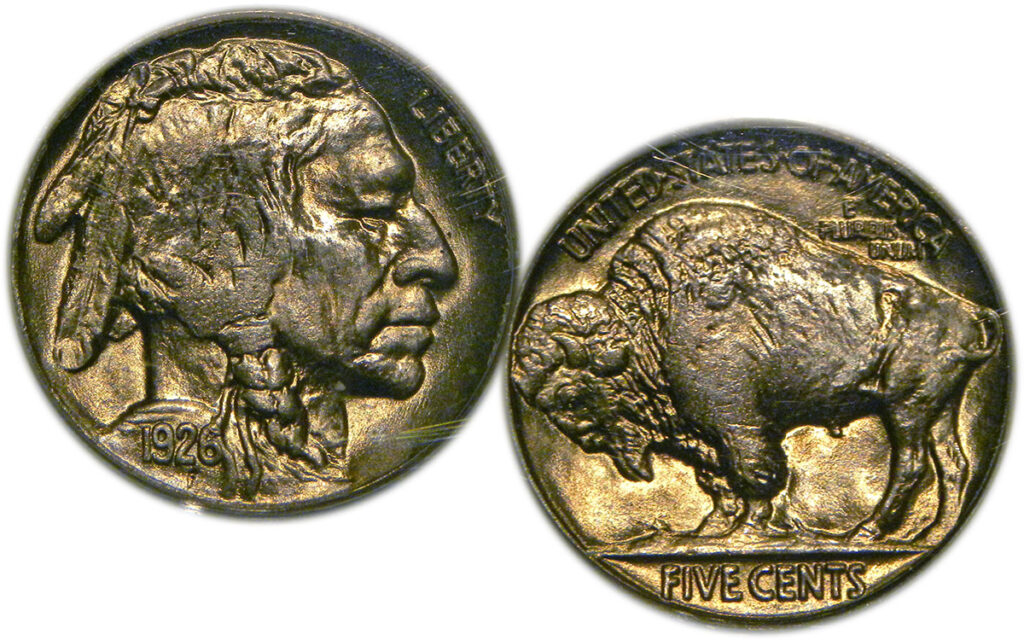
These guidebooks, along with online price guides, will help you plan what kind of collection you can afford, whether you’re a collector or an investor. U.S. coin collectors often collect by design type or by date and mintmark series for a particular coin type, such as Lincoln cents or Buffalo nickels. Let’s say you chose the Buffalos, like the one pictured above. Using the Red Book, you would quickly discover that a complete set in mint state condition will cost thousands of dollars, even without error coins such as the famed 1937-D 3-legged variety. But if you’re willing to accept a few nice, circulated coins, the cost could be much lower, although still significant.
Collectors also have the option to collect tokens and medals, instead of or in addition to, coins and paper money. There’s an enormous variety to choose from. For example, if you’re interested in Seattle merchants, a quick check of https://tokencatalog.com/ reveals nearly 4,500 tokens for Seattle and over 25,000 for the entire state of Washington. Some of these are minor varieties of the same token, but nonetheless, that’s a lot of tokens – you could never collect all of them!
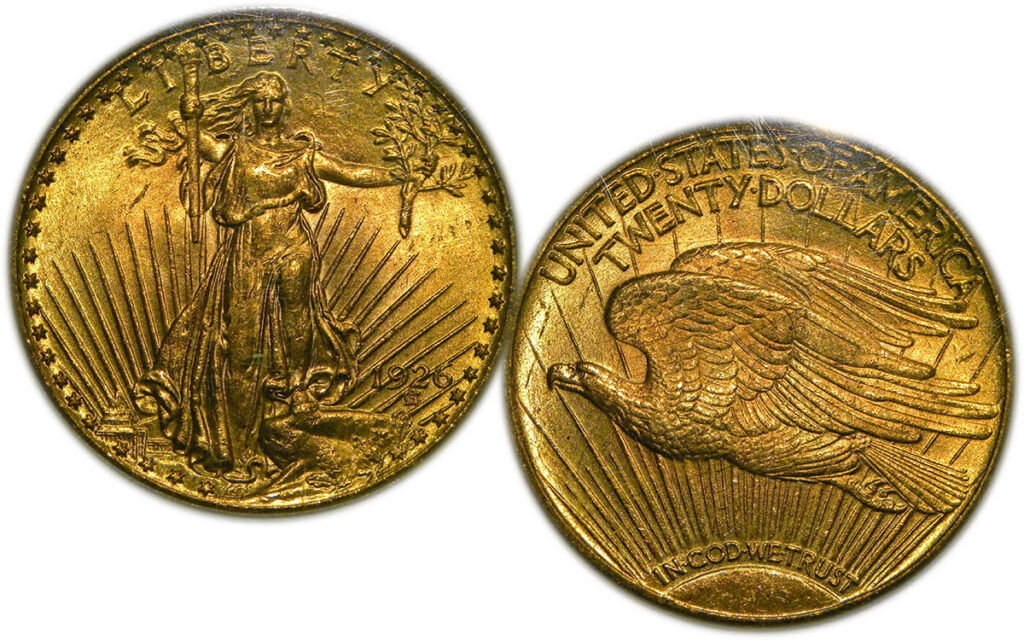
If you’re primarily an investor, you have more limited choices – for example, the Seattle tokens would be a very bad idea – even if you recovered your money on the tokens, you would never recover what you spent travelling around to find them. Realistically, investor-grade coins nowadays are primarily certified (“slabbed”) U.S. and some world coins in the best condition you can reasonably afford. However, they could be classic coin designs such as Saint-Gaudens $20 gold pieces (1926-dated example pictured above) or modern coins in perfect or near-perfect condition. Certified U.S. paper money is also popular and can be considered investor-grade, especially the earlier large-size notes and National Bank Notes. Coin and paper money errors are popular too.
Before you become an investor (or collector-investor) who plans to invest a significant amount of money, you should do a number of things – obviously the basic familiarization I discussed above, but also reviewing market trends, major dealers and auction firms, storage and security measures, etc. Don’t rush into it. But once you do get started, some experts recommend seeking the more expensive items first (if you can), because they are most likely to increase in value.
And while you’re reviewing market trends, don’t forget to study the often-unpredictable bullion price trends as well, for both gold and silver. Consider the $20 gold pieces I mentioned. A common date coin such as 1927 (Philadelphia Mint) is available all the way up to MS-65 (Choice but not perfect mint state) for not a lot more than bullion value (for the nearly one Troy ounce of gold), whereas rarer U.S. gold coins will cost much more than bullion value. This could be a very important consideration in how you want to invest your money.
Be sure to consider attending a local club meeting and a local coin show, if you can, and ask questions!
Leave a Reply
You must be logged in to post a comment.